
The Caretta caretta, commonly known as the loggerhead sea turtle, is one of the most beloved marine animals in the Mediterranean, and Kefalonia Island in Greece is an important nesting site for this endangered species. Kefalonia’s turtles are known for its distinctive large head and reddish-brown shell, the loggerhead turtle is both a symbol of Kefalonia Island’s natural heritage and a vital part of its marine ecosystem.
Let’s explore the Kefalonian turtles characteristics, its nesting habits on the island, threats to its survival, conservation efforts, and how visitors can responsibly observe these amazing creatures.
About Kefalonia’s Turtles
The loggerhead sea turtle is a marine reptile that belongs to the Cheloniidae family, with a name of Caretta caretta. This sea turtle species is common in the waters of Kefalonia Island, yet its population is considered vulnerable due to numerous environmental threats.
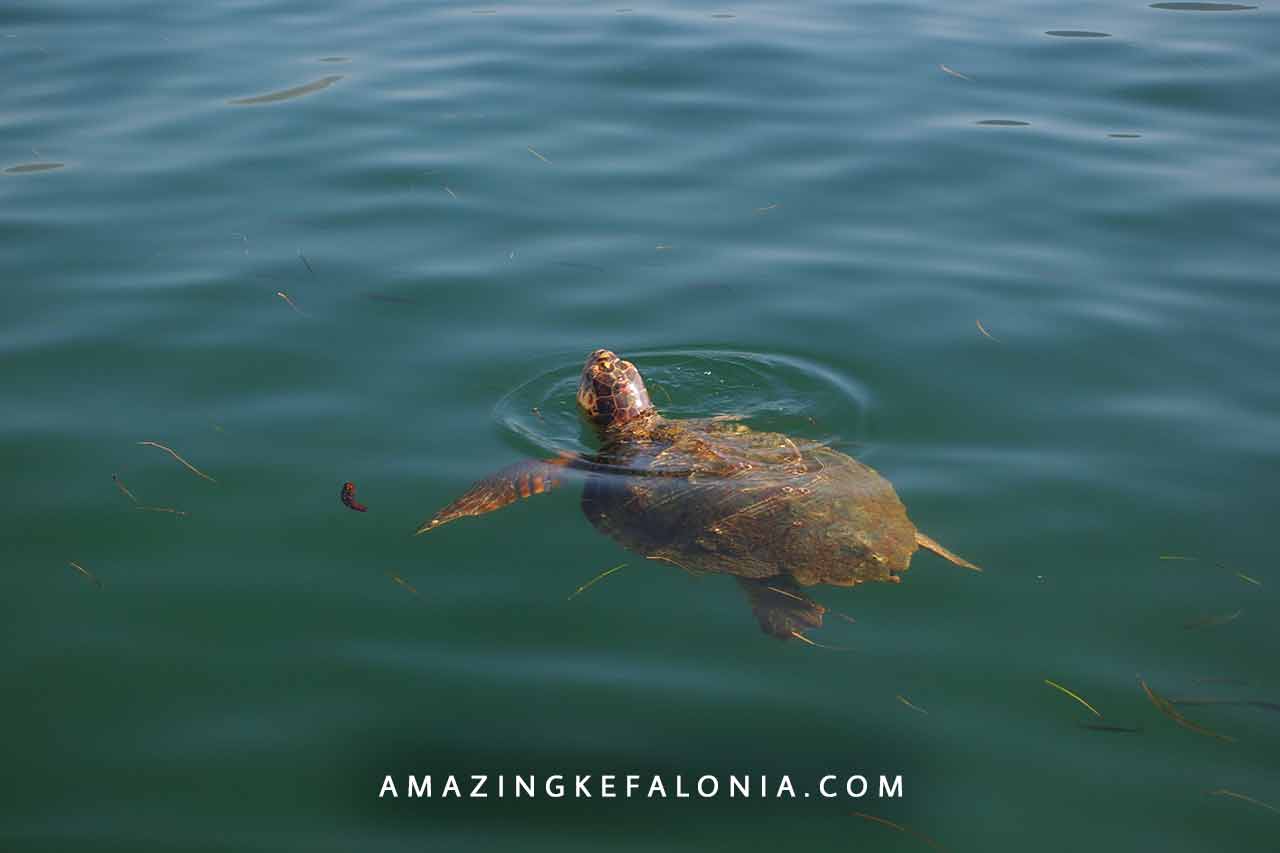
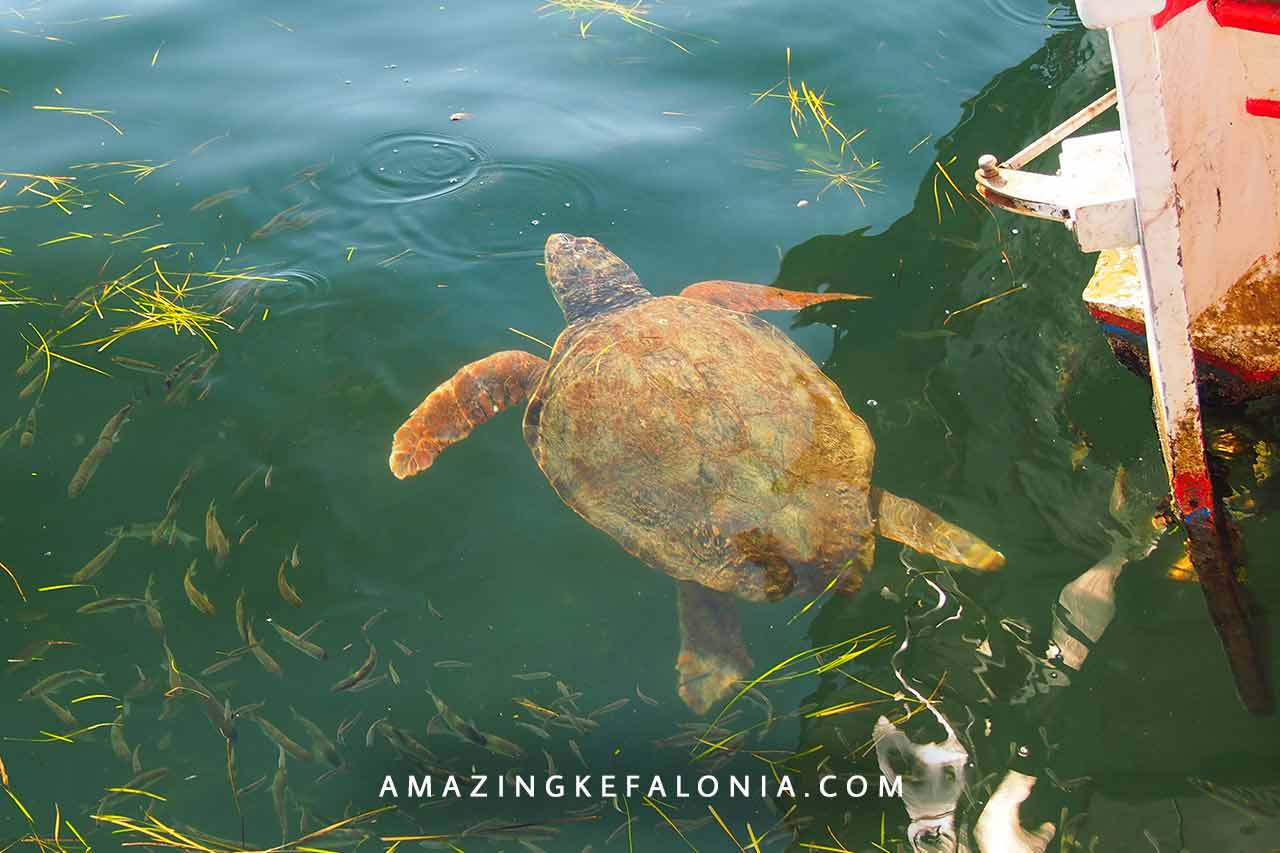
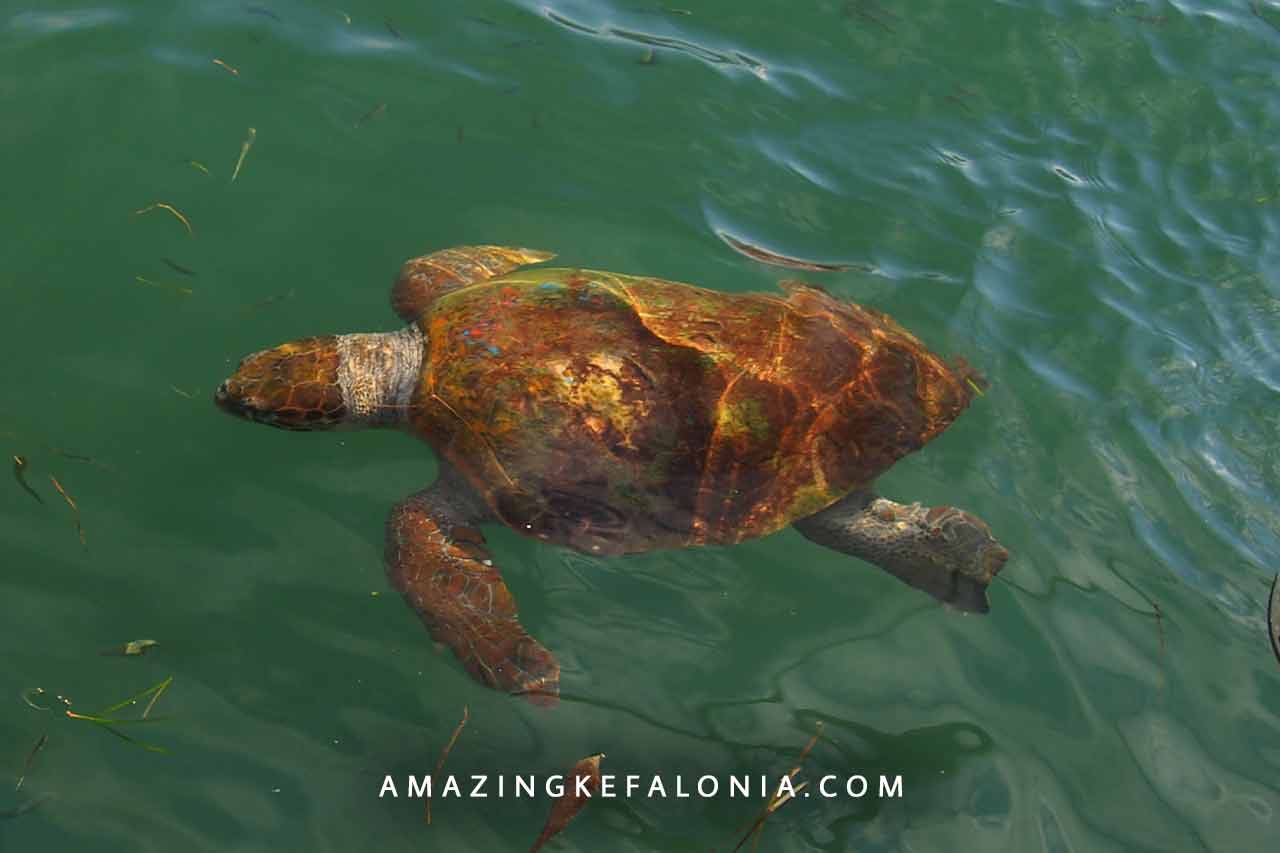
Loggerhead turtles are medium to large, typically measuring between 70-90 cm (28-35 inches) in shell length and weighing between 70-160 kg (154-353 pounds). They are easily recognizable by their large heads and strong jaws, adapted for crushing hard-shelled prey. Their carapace (shell) is often a reddish-brown color, while the underside, or plastron, is pale yellow.
These turtles are known for their long migratory patterns, often traveling vast distances between their feeding grounds and nesting beaches, with a remarkable instinct that guides them back to the beaches where they were born.
Turtle Nesting Grounds on Kefalonia Island
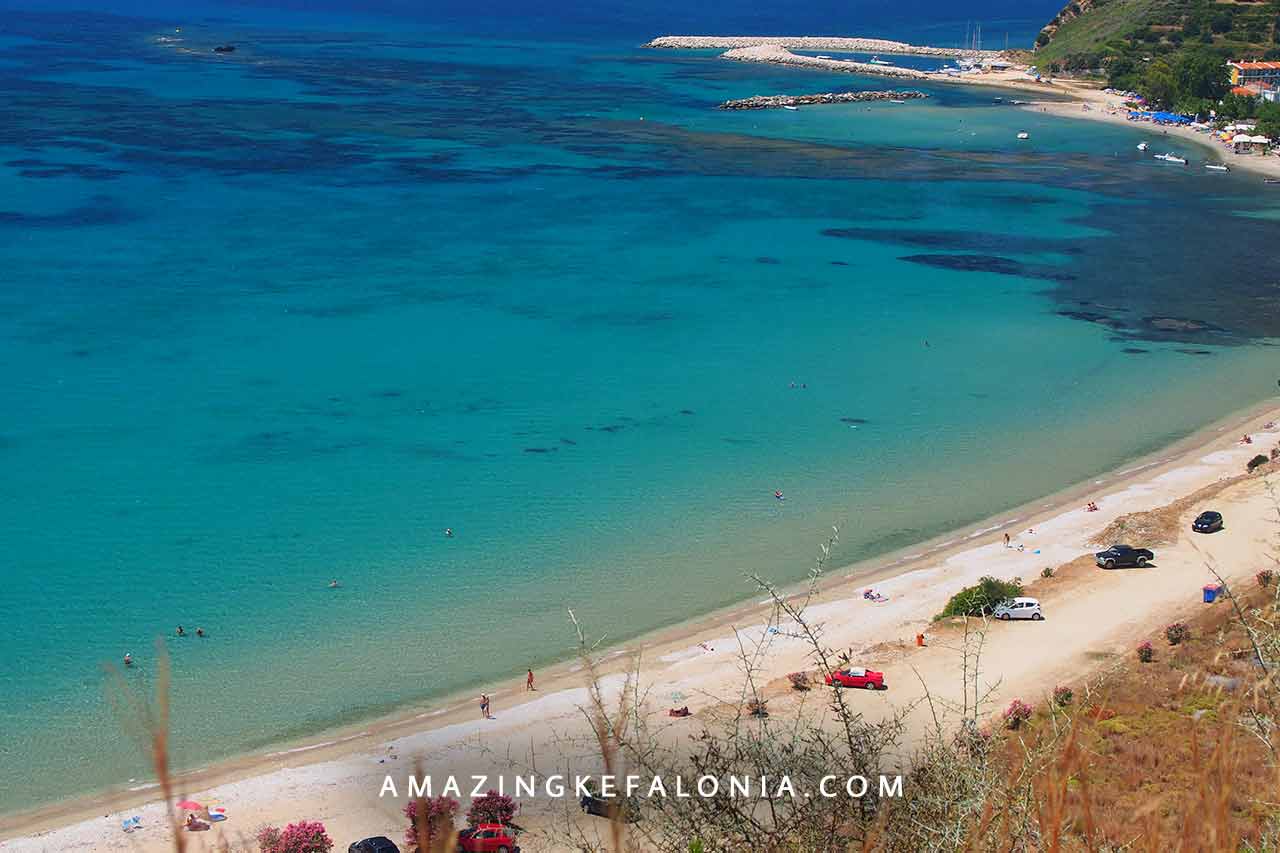
Kefalonia is a significant nesting site for loggerhead turtles in the Ionian Sea, alongside smaller neighboring islands and Zakynthos. Each summer, the sandy beaches of Kefalonia become a crucial habitat for female loggerheads to lay their eggs.
Nesting Beaches in Kefalonia Island
- Mounda Beach: near the town of Skala, Mounda Beach is a primary nesting site on Kefalonia. Its soft sand and low-traffic areas provide the ideal conditions for loggerhead turtles.
- Katelios beach: another nesting ground where turtles frequently lay eggs, although it sees more tourist activity.
- The sandy beaches near Svoronata: important nesting sites are Ammes beach, Avithos beach and the other shallow sandy beaches of the area
- The southern beaches of Paliki peninsula, such as Megas Lakkos and Lepeda beach.
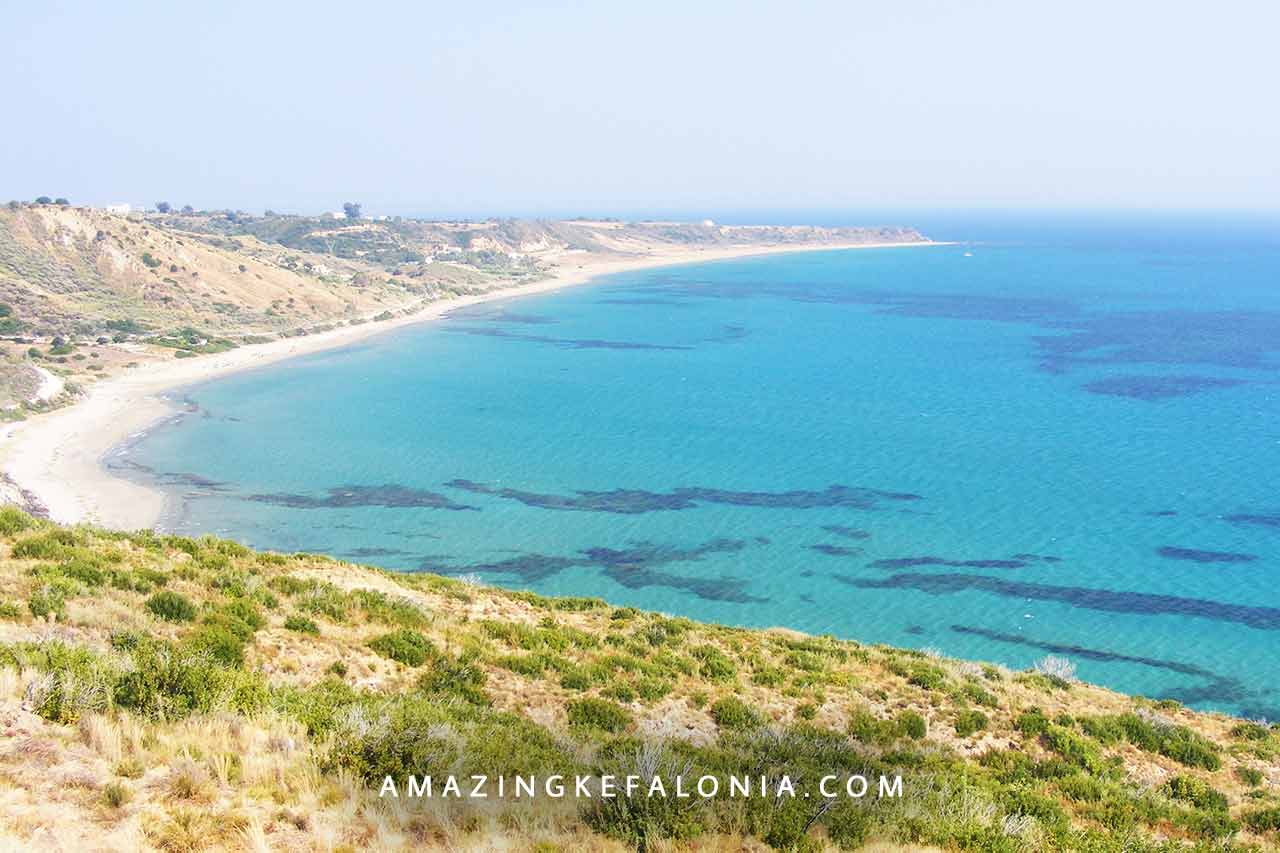
Mounda beach and Katelios are very important nesting sites of Kefalonia Island for turtles
The nesting season runs from June to August, when females return to lay eggs at night. After about 50-60 days, the hatchlings emerge from the sand and make their way to the sea, guided by the natural light on the horizon.
Nesting Behavior of the Kefalonia’s Turtles
Loggerhead turtles display a unique nesting ritual. A female loggerhead returns to the beach where she was born, using her flippers to dig a nest about 40-50 cm (15-20 inches) deep. She lays a clutch of about 80-120 eggs. During the nesting season, a female may lay up to 5 clutches, each two weeks apart. After incubating, the hatchlings break out of their shells and wait until nightfall to make their way to the sea, a journey filled with obstacles.
The best place to meet with a turtle in Kefalonia Island
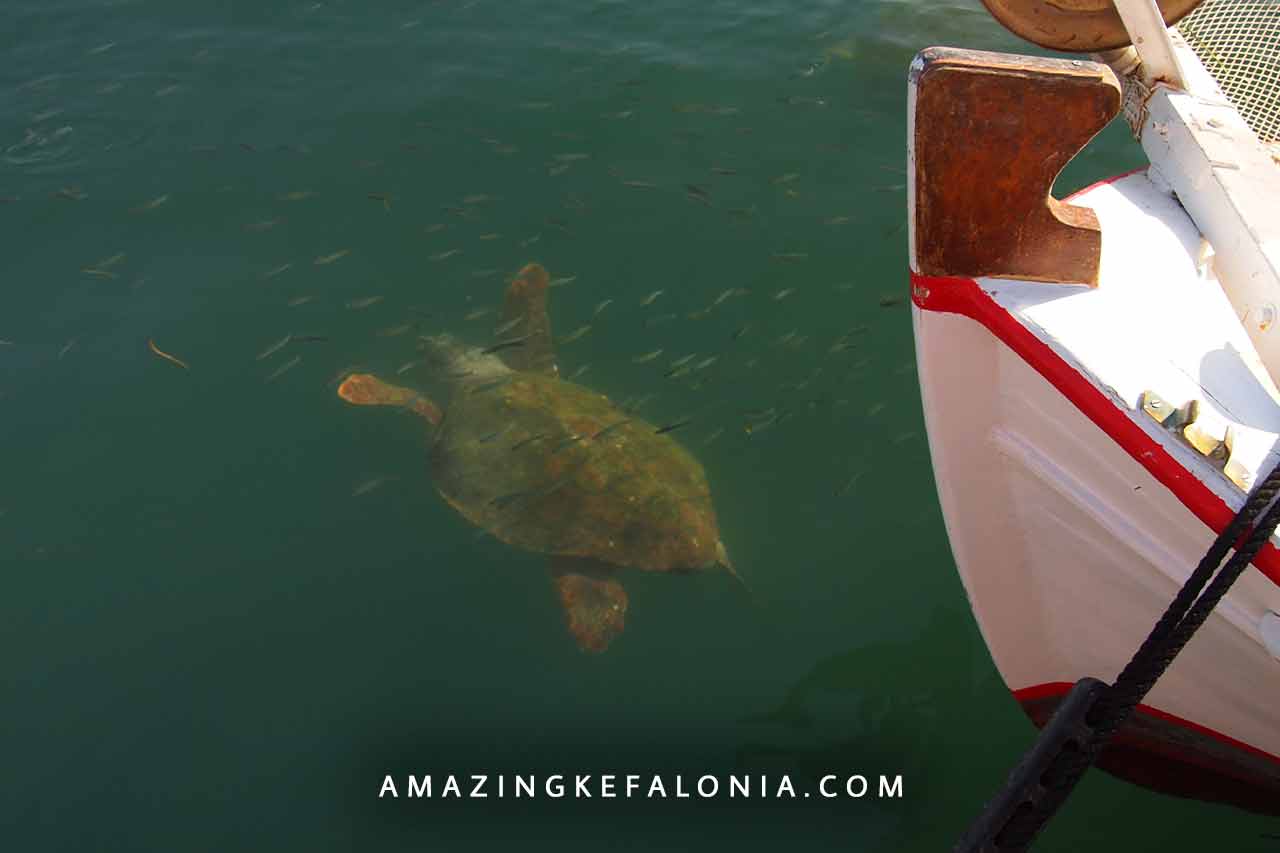
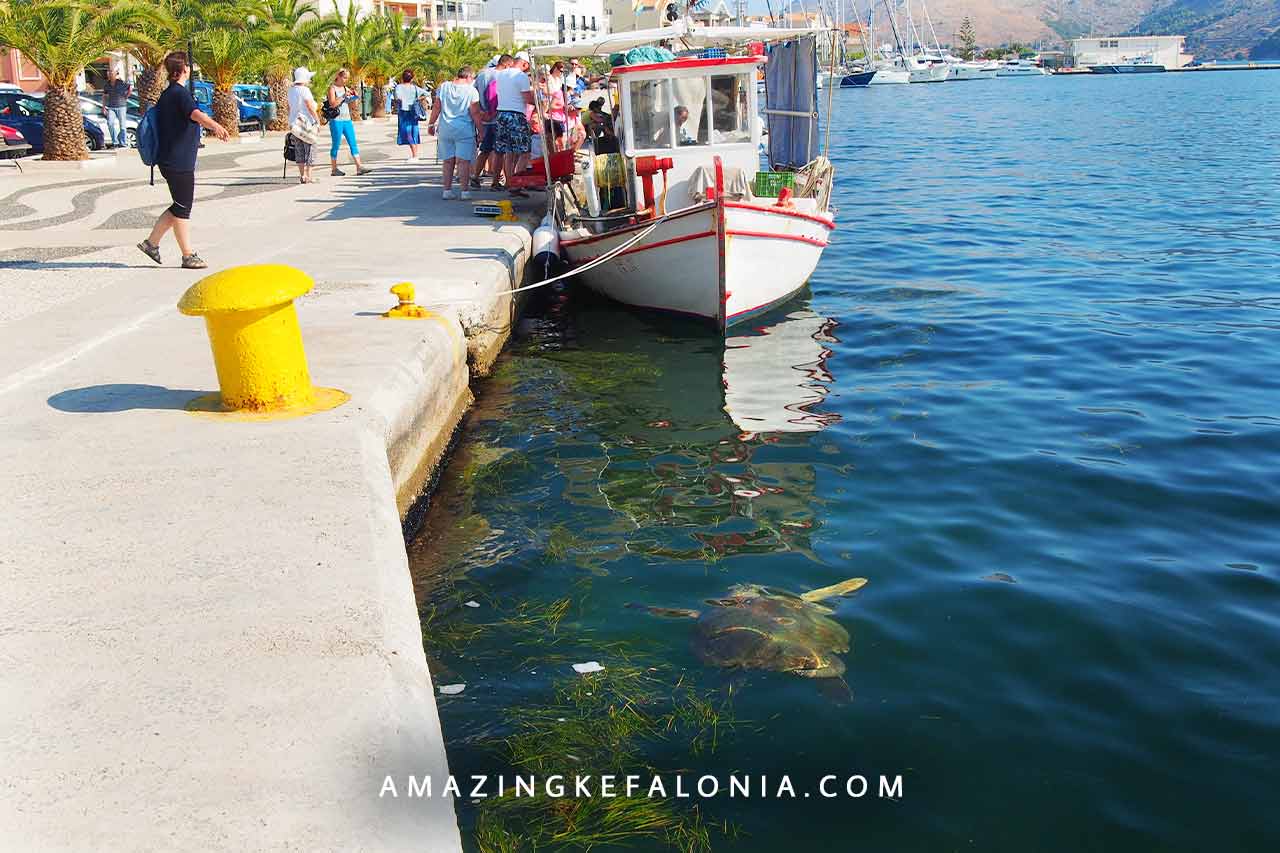
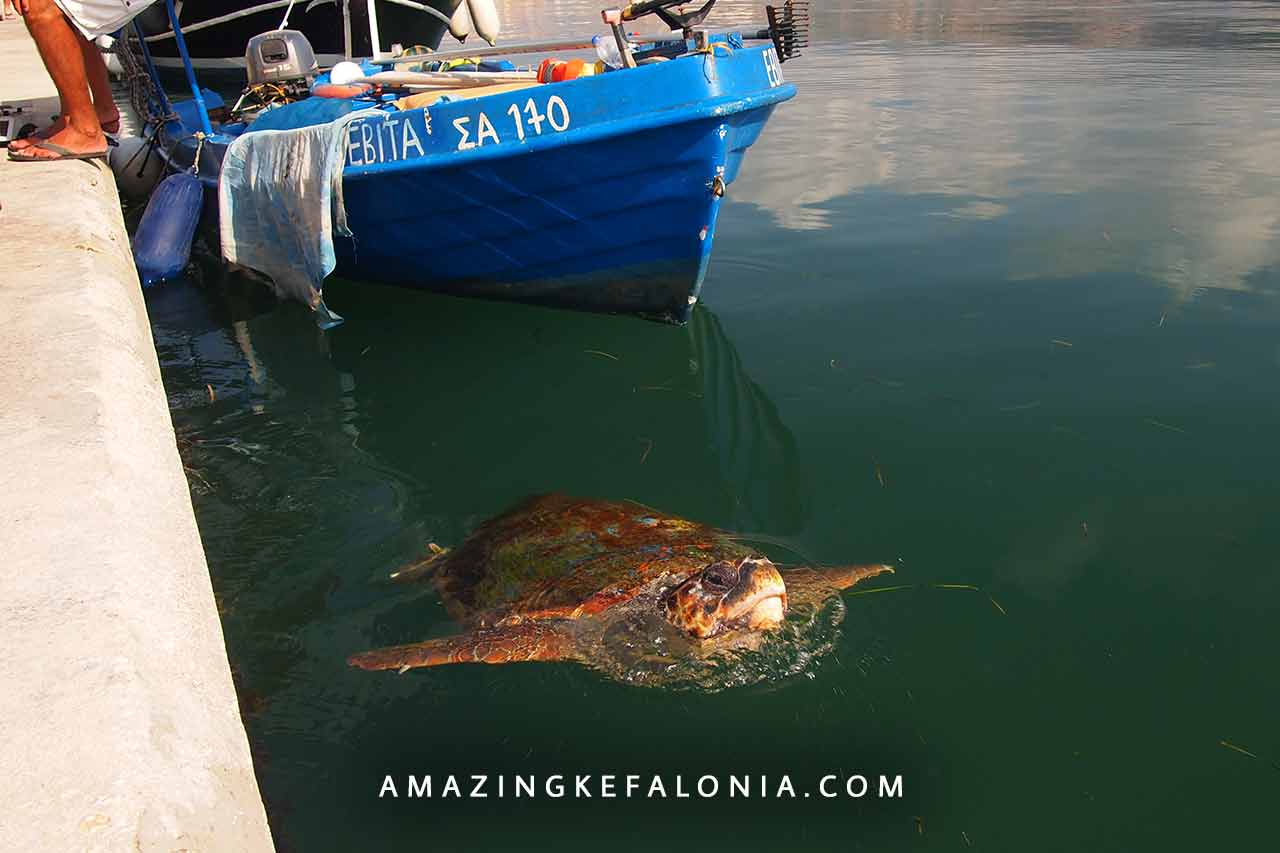
On the beaches of Kefalonia turtles are very rare during daytime, but in the port of Argostoli there are always some turtles in the morning hours. The port of Argostoli is the best turtle watching spot in Kefalonia Island, just walk to the fishing boats in the morning hours.
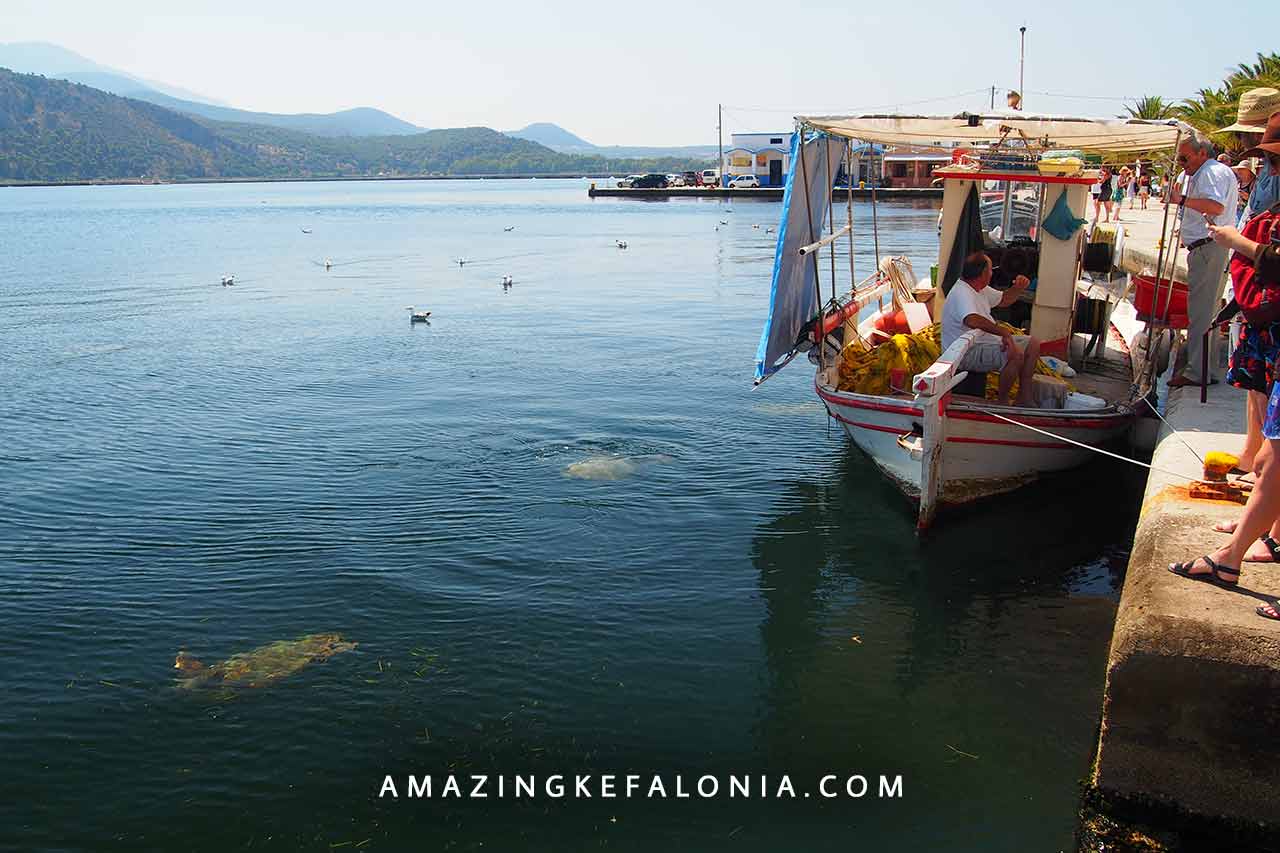
Passing through De Bosset bridge there can be seen also swimming turtles in the sea. The local turtles like this shallow lagoon, where they feed on fish scraps thrown into the sea by fishermen.
Why the turtles of Kefalonia are so protected
Loggerhead turtles face numerous threats in the Mediterranean, both on land and in the sea. Here are some of the major challenges that affect their survival:
Habitat Loss and Human Disturbance
Coastal development, particularly the construction of hotels and resorts, can disturb nesting sites. Bright artificial lights from nearby buildings and roads disorient hatchlings, leading them away from the sea and putting them at risk from predators or dehydration.
Pollution and Plastic Waste
Loggerheads often mistake plastic bags and other debris for jellyfish, one of their favorite foods. Ingesting plastic can lead to blockages in their digestive system and even death. Pollution, including chemicals from agricultural runoff, also contaminates the turtles’ habitats, affecting their health and reproductive success.
Fishing Nets and Bycatch
Accidental entanglement in fishing gear, especially longlines and trawling nets, is one of the leading causes of loggerhead mortality. When turtles get caught in nets, they may drown or suffer severe injuries.
Climate Change
Loggerheads’ nesting success is closely tied to environmental conditions. Rising temperatures due to climate change impact the sand temperature on nesting beaches, which can alter the gender ratio of hatchlings (warmer sand tends to produce more females). Additionally, sea-level rise and increased storm activity can wash away nests and erode crucial nesting habitats.
Conservation Efforts on Kefalonia Island in Greece
To protect the loggerhead turtle, several conservation organizations, local authorities, and dedicated volunteers work together on Kefalonia. Here are some of the conservation initiatives in place to protect this endangered species:
- Wildlife Sense: wildlifesense.com
- Katelios Group: kateliosgroup.org
Volunteers and researchers monitor nesting sites during the breeding season, marking nests to protect them from human activity.
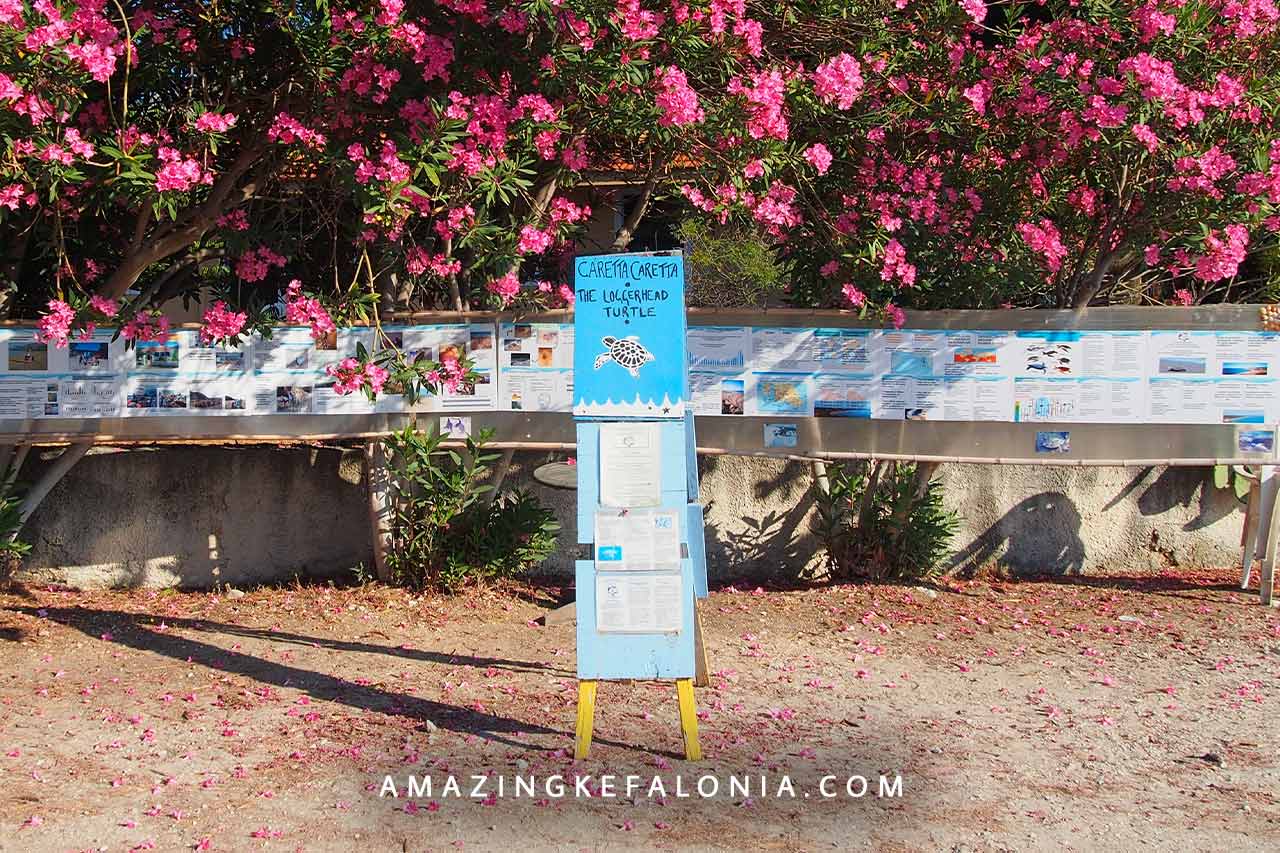
They educate locals and tourists on the importance of protecting nesting beaches and inform visitors on how to observe turtles responsibly. Injured turtles are rehabilitated and cared for at rescue centers, with the aim of releasing them back into the wild.
Marine Protected Areas
Parts of Kefalonia’s waters are designated as Marine Protected Areas (MPAs), limiting fishing and boat traffic to reduce disturbances and the likelihood of turtles being harmed. Local authorities in Kefalonia work with conservation organizations to manage nesting beaches. Measures include reducing artificial lighting during nesting and hatching seasons, restricting vehicle access, and installing protective barriers around nests.
Hotels and resorts near nesting beaches are encouraged to implement turtle-friendly practices, such as using low-level lighting and educating guests on turtle conservation. Kefalonia offers visitors the unique opportunity to witness loggerhead turtles in their natural habitat. However, it’s crucial to follow responsible viewing practices to avoid disturbing these sensitive animals.
Guidelines for Observing Nesting Turtles
- Keep a safe distance: Maintain a minimum distance of 8-10 meters (33 feet) from nesting turtles and avoid using flash photography or artificial lights, which can disturb them.
- Stay quiet and move slowly: Sudden movements or loud noises can startle turtles and interrupt their nesting process.
- Respect restricted areas: Obey any signs or markers indicating protected nesting zones, and do not attempt to touch or handle turtles or eggs.
- If you’re fortunate enough to witness hatchlings, avoid intervening in their journey to the sea, as this can interfere with their natural imprinting process, which helps them return to the same beach as adults. Keep your distance and avoid using lights.
Educational Opportunities and Volunteer Programs
For visitors interested in a more hands-on experience with turtle conservation, Kefalonia offers several opportunities to learn and get involved.
Each year, Wildlife Sense welcomes volunteers from around the world to assist with conservation efforts on Kefalonia’s beaches. Volunteers help monitor nesting sites, conduct public awareness campaigns, and protect hatchlings. This program offers a chance to make a tangible impact and learn about marine biology and conservation.
Plastic pollution poses a significant threat to sea turtles, and beach clean-ups are a simple yet effective way to contribute to their conservation. Many local conservation groups organize beach clean-ups on Kefalonia’s shores, and tourists are encouraged to join these efforts.
Some organizations offer educational workshops on sea turtle conservation, giving participants insights into the biology of loggerhead turtles, the challenges they face, and the conservation strategies in place to protect them. These workshops are great for families, students, and anyone with an interest in marine conservation.
Interesting Facts About Loggerhead Turtles
- Loggerhead turtles have an incredible ability to return to the exact beach where they were born, sometimes after spending decades at sea. Scientists believe they use the earth’s magnetic field to navigate.
- Loggerheads can live up to 50 years or more in the wild, spending much of their lives migrating between feeding and nesting sites.
- As both predators and prey, loggerheads play an important role in marine ecosystems, helping to maintain balance in seagrass beds and coral reefs by controlling populations of invertebrates.
Final thoughts
The loggerhead sea turtles of Kefalonia Island offer visitors a remarkable glimpse into the resilience and beauty of nature. These ancient mariners, who have roamed the oceans for millions of years, now face numerous challenges that threaten their survival.
By supporting conservation efforts and engaging in responsible tourism, visitors to Kefalonia can play an active role in safeguarding the future of the Caretta caretta and ensure that these gentle creatures continue to thrive on the island’s shores.
